The Fabric Guide to Genuinely Smoothing Activewear
Quick Answer: Four things separate genuinely smoothing activewear from a label that says “sculpting.” Fabric weight and recovery — stretch it and it should snap back instantly, not stay stretched. Opacity under stretch — do the squat test in a mirror, not on the hanger. A wide high waistband, 3 to 5 inches, properly constructed so it doesn’t roll. Strategic seaming that contours rather than flat panels. Learn to check those four and the marketing stops mattering.
“Smoothing.” “Sculpting.” “Shaping.” These words appear on roughly every third activewear label and mean approximately nothing on their own.
Two pairs of leggings at the same price, both claiming the same thing, will perform completely differently.
The difference isn’t in the copy. It’s in four physical properties you can check in about ninety seconds with the garment in your hands — which is good news, because it means you never have to trust the tag again.
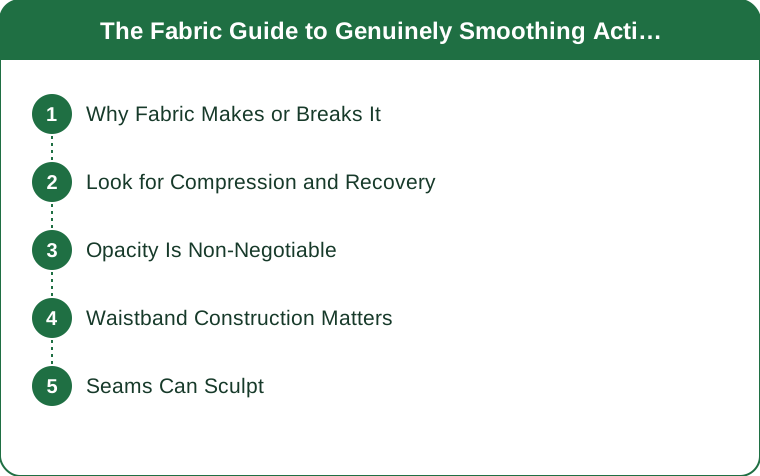
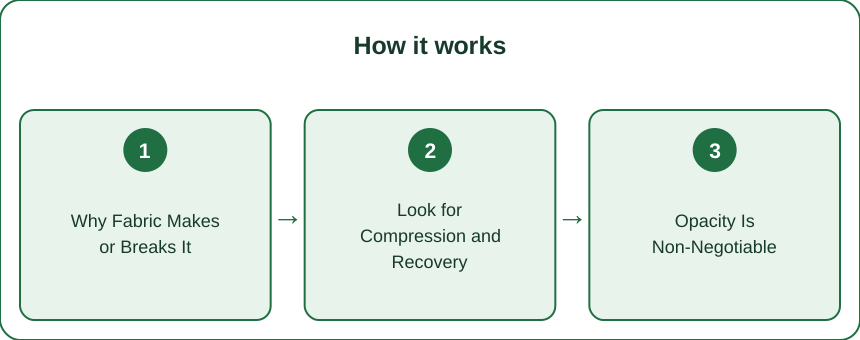
Why does the fabric matter more than the label?
Because smoothing is a mechanical property, not a design claim.
Smoothing comes from a fabric’s thickness, its stretch, and — most importantly — its recovery. A thin, flimsy knit will never smooth anything, no matter what’s printed on the waistband, because there isn’t enough material to distribute pressure evenly.
The practical proxy is fabric weight, usually given in GSM (grams per square meter). Lightweight training activewear sits around 180–220 GSM. Genuinely smoothing fabric generally starts around 240 GSM and up. Most brands don’t publish it, which is why the hand test below matters.
Composition tells you something too: look for nylon-dominant blends with 18–25% elastane or spandex. Nylon feels smoother and denser than polyester at the same weight, and a higher elastane percentage drives both compression and recovery.
How do you test compression and recovery in a store?
Two tests, ten seconds each.
The stretch-and-release test. Grab a section of fabric with both hands and stretch it firmly, then let go. Good fabric snaps back to its original dimensions immediately. Poor fabric returns slowly, or comes back slightly larger than it started.
Recovery is what actually matters for how a piece performs over a day. Compression is how it feels in the first ten minutes; recovery is whether it’s still doing that at hour six or bagging out at the knees and seat. Almost everyone shops for compression and gets let down by recovery.
The knee test. On leggings specifically, check the knee area after a few wears — bagging there is the first and clearest sign of poor recovery, and it’s the reason a pair that felt great in month one is disappointing in month four.

Why is opacity non-negotiable?
Because a fabric that goes sheer under stretch has failed at both jobs at once — it isn’t smoothing anything and it’s undermining your confidence in the process.
The squat test is the only test. Fabric that’s fully opaque hanging flat can become noticeably sheer at 40% stretch, which is exactly what a deep squat produces. Check it in a fitting room mirror, in a full squat, from behind.
Two things predict opacity: weight (denser knits are more opaque) and color (light and heather colorways go sheer far more readily than dark solids). A brand’s black leggings and its light grey leggings in the same fabric can perform very differently.
Squat-proof coverage is genuinely non-negotiable in high waist yoga pants you plan to train in. Everything else on this list is a matter of degree; this one isn’t.
Does the waistband really matter that much?
It does more smoothing work than any other single component.
Look for a wide high waistband — 3 to 5 inches — with real construction rather than a folded-over hem. A wide band distributes pressure across a larger area, which is what smooths rather than creates a line. A narrow band concentrates pressure at one point, which is what creates the roll-over-the-top effect people are trying to avoid.
Things to check:
- Width. Under 3 inches on a “high waist” piece is mostly marketing.
- Whether it’s a separate constructed panel or just the leg fabric folded over. A separate panel, often in a denser knit, performs much better.
- Inner elastic or bonded construction at the top edge, which is what keeps it from rolling down.
- Whether it stays put when you bend forward. Test this in the fitting room — the roll-down happens at the hip hinge, not standing still.
A great fabric with a bad waistband disappoints. A good fabric with an excellent waistband often doesn’t.
How do seams change the way a piece looks?
Strategically placed seams create contour that flat panels can’t.
A flat panel of fabric follows whatever is underneath it. Panelled construction — curved seams through the back, side, and thigh — shapes the garment before you put it on, so it holds a three-dimensional form rather than draping over one.
This is what separates genuinely well-designed pieces from ones that are simply made from good fabric. It’s also more expensive to manufacture, which is part of what you’re paying for at higher price points.
Two cautions. Seams have to be flatlocked or bonded, or they chafe — run a finger along the inside seam and check it’s flat rather than ridged. And more seams isn’t better; decorative seaming that doesn’t follow the body’s lines is just more places for a garment to fail.
5 Mistakes Everyone Makes
- Shopping the label instead of the fabric. “Sculpting” is not a specification. Weight, recovery, and opacity are.
- Testing compression but not recovery. Compression is the first ten minutes; recovery is hours two through six and month four.
- Skipping the squat test. Opacity flat on a hanger tells you nothing about opacity at 40% stretch.
- Sizing down for more smoothing. It produces compression, displacement, and a visible roll — not a smoother line. Buy your size.
- Ignoring the waistband. It does more of the smoothing work than the leg fabric does, and it’s the part most people never examine.
FAQ
What fabric is best for smoothing activewear?
Nylon-dominant blends with roughly 18–25% elastane, at a fabric weight of about 240 GSM or higher. Nylon feels denser and smoother than polyester at equivalent weight, and the higher elastane content drives both compression and the recovery that keeps a piece performing over time. Lighter fabrics around 180–220 GSM are better suited to breathability than to smoothing.
How do you know if leggings are squat-proof?
Put them on and do a full deep squat in front of a mirror, checking from behind — that’s roughly 40% stretch, which is where fabric goes sheer if it’s going to. Opacity on a hanger predicts almost nothing. Darker solids are generally more reliable than heathers and light colors made from the same fabric.
Why do my leggings bag out at the knees?
Poor fabric recovery. The material stretches under repeated bending and doesn’t return to its original dimensions, so the knee area gradually holds a bagged shape. It’s a property of the fabric rather than of care, though washing in hot water and machine drying accelerate it considerably. The stretch-and-release test before buying is the best available predictor.
TL;DR:
- Smoothing is mechanical, not a marketing claim — check weight, recovery, opacity, and waistband.
- Look for nylon-dominant blends with 18–25% elastane, around 240 GSM or heavier.
- Test recovery, not just compression: stretch it and it should snap back instantly.
- Do the squat test in a mirror. Opacity on a hanger means nothing.
- A wide 3–5 inch constructed waistband does more smoothing work than the leg fabric.
- Strategic curved seams contour; flat panels just follow what’s underneath.
- Never size down. It creates rolls, not a smoother line.
Keep Reading
This article is for general informational and styling purposes only. Fit, sizing, and product availability may vary — check current details before purchasing.