Why Your Smoothing Leggings Felt Perfect in the Store — and Stopped Working Within Weeks
Quick Answer: Smoothing compression relies on elastane fibers holding tension, and those fibers gradually lose elasticity with repeated wear, heat exposure (dryers), and washing — this is a real, measurable fabric fatigue process, not your imagination. Checking fabric composition and care habits before and after buying both matter.
In the fitting room, the compression felt confident and exactly engineered — smooth, supportive, no rolling or digging. A month of regular wear and washing later, the same pair feels noticeably less controlling, like the fabric has just given up. That’s a real, documented process, and it’s largely predictable if you know what drives it.

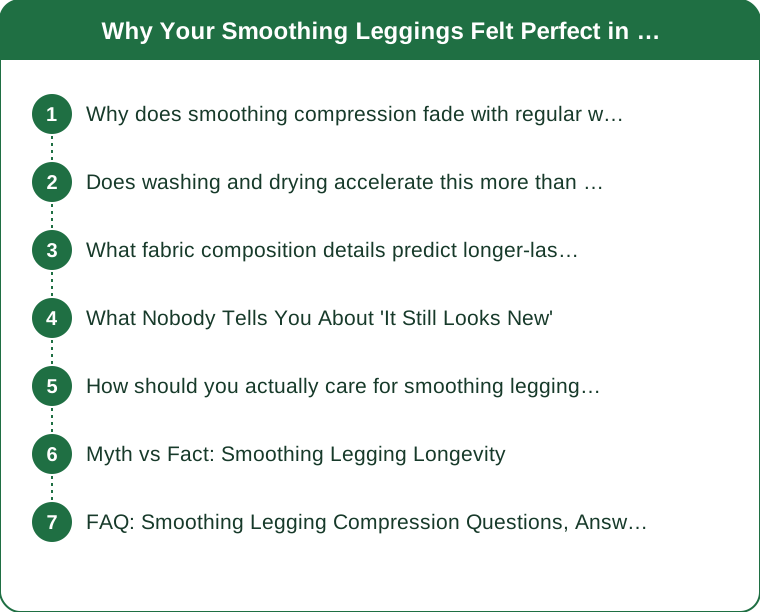
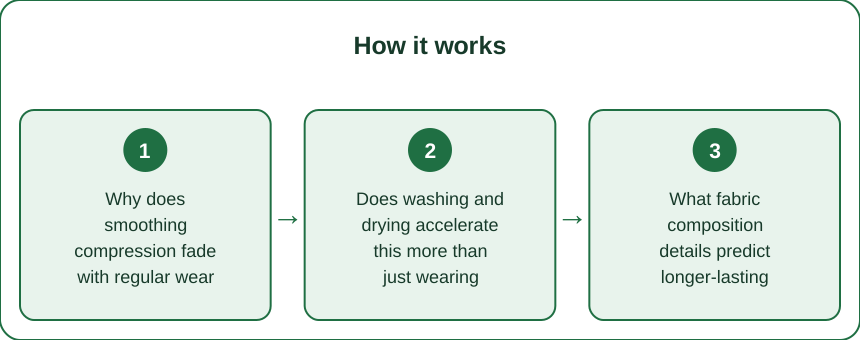
Why does smoothing compression fade with regular wear specifically?
Smoothing effect comes primarily from elastane (spandex) fibers woven or blended into the fabric, which stretch and recover thousands of times with each wear and movement. Elastane fibers have a finite lifespan of stretch-recovery cycles — every wear session and every wash cycle uses up some of that capacity, gradually and permanently reducing how much tension the fabric can generate, even though it might still look visually intact.
Does washing and drying accelerate this more than just wearing them?
Significantly, especially heat from dryers. High heat breaks down elastane fibers considerably faster than normal wear alone — a pair regularly machine-dried on high heat can lose meaningful compression within weeks, while an identical pair air-dried and washed in cool water can maintain its smoothing effect for many months longer. This single care habit is one of the biggest predictors of how long compression actually lasts.
What fabric composition details predict longer-lasting compression?
Look for a higher elastane percentage (typically 15-25% for genuine smoothing compression, versus 5-10% in a standard, non-compression legging) and check for phrases like ‘four-way stretch’ or ‘compression-engineered,’ which usually indicate a denser, more durable elastane weave built specifically to hold tension longer under repeated wear.

What Nobody Tells You About ‘It Still Looks New’
Here’s the disconnect that catches people off guard: leggings can look completely unworn — no pilling, no visible fading, no obvious wear — while having already lost significant compression function. Elastane fatigue is largely invisible to the eye; it’s a mechanical property loss, not a cosmetic one. This is why people are often surprised the ‘like-new looking’ pair in their drawer doesn’t actually smooth the way it used to.
How should you actually care for smoothing leggings to extend their life?
Wash in cold water, skip the dryer entirely (air dry flat or hanging), and avoid fabric softener, which can coat and reduce elastane fiber responsiveness over time. These three changes together meaningfully extend how long compression lasts compared to regular hot-wash, machine-dry care — often the difference between losing effective compression in 6-8 weeks versus 6+ months.
Myth vs Fact: Smoothing Legging Longevity
Myth: If leggings still look new, they still smooth the way they used to. Fact: Compression loss from elastane fatigue is often invisible — looking new and functioning like new are two separate things.
Myth: All smoothing leggings lose compression at the same rate. Fact: Elastane percentage and weave density vary significantly between products, and care habits (heat exposure especially) affect longevity as much as the product itself.
Myth: Fabric softener helps keep leggings feeling nice and extends their life. Fact: Fabric softener can coat elastane fibers and reduce their stretch-recovery responsiveness, working against compression longevity rather than helping it.
FAQ: Smoothing Legging Compression Questions, Answered
How can I tell if my leggings have lost compression, versus just feeling different?
Compare the waistband and thigh tension directly against a brand-new pair of the same style if you have one, or check whether digging/rolling that never happened before has started appearing — a fairly reliable sign compression has faded.
Is there any way to restore lost compression in older leggings?
No reliable way exists to restore elastane once it’s genuinely fatigued — prevention through gentle care is the only real lever, not a fix after the fact.
How often should I replace smoothing leggings if I wear them frequently?
With careful cold-wash, air-dry care, many people get 6-12 months of solid compression from a well-made pair; frequent hot-wash and machine-dry use can shorten that to 6-8 weeks in some cases.
TL;DR:
- Smoothing compression comes from elastane fibers that fatigue with wear, washing, and especially dryer heat
- Compression loss is often invisible — leggings can look new while functioning much less effectively
- Cold wash, air dry, and no fabric softener meaningfully extend how long compression lasts
- Higher elastane percentage and denser weave predict longer-lasting compression from the start
Check your care routine today — switching to cold wash and air dry on your next few washes is the single biggest lever for keeping your smoothing leggings actually smoothing.
See It in Motion
Seen here: High Waist Embossed Yoga Leggings with Side Pockets — shop it on bubblelime.com
Keep Reading
This article is for general informational and styling purposes only. Fit, sizing, and product availability may vary — check current details before purchasing.