Why Smoothing Leggings Feel Wrong on a Long Car Journey
Quick Answer: A car seat does three things a gym never does: it holds your hips at a fixed flexed angle for hours, it presses the waistband against a seatback so it cannot expand, and it traps heat against the fabric with no airflow. Smoothing fabrics are engineered around a body that moves and dissipates heat - remove both and the same garment behaves completely differently. It is not a fault in the leggings; it is a mismatch between what they were designed for and what a car seat asks of them.
Here is what is happening and what to wear instead for a long drive.

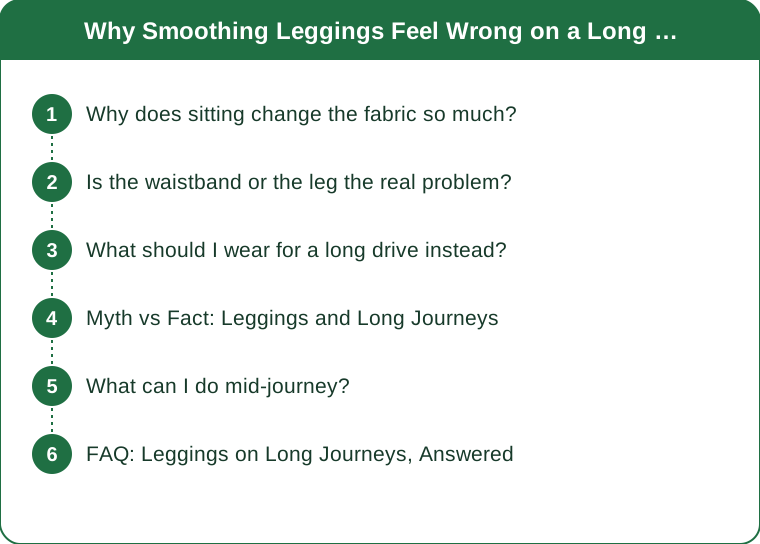
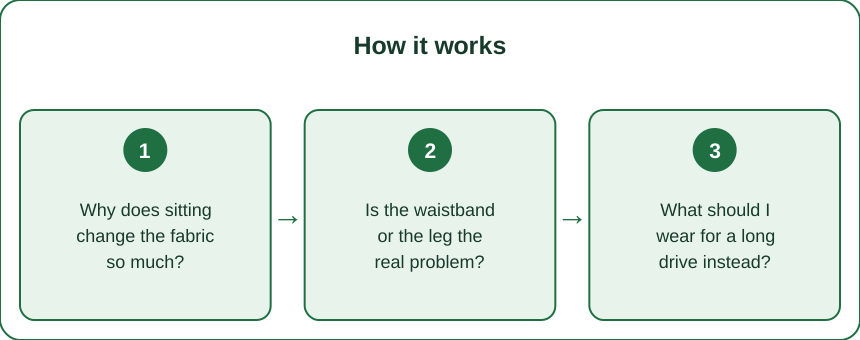
Why does sitting change the fabric so much?
Seated hip flexion puts smoothing fabric at the top of its stretch range and holds it there. Standing, the waistband and upper thigh sit mid-range. Sitting at 90 degrees or less pushes them near the limit, and holding a fabric near its limit for hours is different from cycling through it.
Compression is calculated for a moving body. The pressure gradient in a smoothing legging assumes the muscle underneath changes shape and the fabric moves with it. Static compression on a static limb does not do the same thing and simply reads as constriction.
A car seat adds external counter-pressure. The seatback pushes against the waistband from behind, so the fabric cannot expand outward as you breathe or as your stomach changes through the day - it can only press inward.
Elastane also relaxes slightly under sustained tension and heat, which is why leggings feel loose at the knee and tight at the waist after two hours. The stretch has redistributed rather than gone away.
And the seatbelt sits exactly across the waistband on most people. Two compressive bands at the same point is a combination almost nobody accounts for when choosing what to wear.
Is the waistband or the leg the real problem?
The waistband, in nearly every case. A high-rise smoothing waistband is the most compressive part of the garment and it sits across the abdomen - the area that changes most through a day of sitting and eating.
Digestion is the part people miss. Sitting slows gastric emptying, and the abdomen genuinely expands after eating. A waistband that fitted perfectly at 9am is fitting a measurably different body at 1pm, particularly on a travel day with unusual food and timing.
Bonded or double-layer waistbands are the least forgiving. They have almost no give by design - that is what makes them smooth. A single-layer or ribbed waistband flexes and is far better for sitting.
The leg issue is different: it is heat and moisture, not pressure. With no airflow, sweat cannot evaporate. Damp fabric against skin for three hours is a friction and irritation problem, especially behind the knee where the seat edge presses.
And the knee bunching is cosmetic but real. Fabric held in a bend for hours creases and the crease persists, which is why leggings look wrinkled at the knee when you get out of the car even though nothing is wrong with them.
What should I wear for a long drive instead?
Mid-rise over high-rise, if you have the choice. A waistband sitting below the natural waist avoids the fullest part of the abdomen and does not fight the seatbelt for the same real estate.
Single-layer or ribbed waistband, not bonded. Ribbed waistbands expand and recover; bonded ones are engineered to not move, which is the wrong property for four hours in a seat.
Drop the compression level one step. Your everyday smoothing legging is likely more compressive than a car journey wants. A lighter, softer knit does the same visual job at rest - and rest is what a car journey is.
Wide-leg or straight-leg trousers in a stretch knit are genuinely better for very long drives and read no less put-together. The absence of leg compression matters more than people expect over four hours.
And plan for the arrival, not the drive. If you need the smoothing effect at your destination, wear something comfortable and change on arrival. That sounds obvious and almost nobody does it - but for a drive over three hours it is the right answer.
Seasonal note: as it cools into autumn, the temptation is to layer thicker leggings under a coat for a drive. Car heating plus a coat plus thick fabric is the hottest combination available - and heat, not thickness, is what drives the discomfort.

Myth vs Fact: Leggings and Long Journeys
Myth: compression leggings are good for travel because they prevent swelling. Fact: graduated medical compression stockings are designed for that and are specified in mmHg. A smoothing legging is not graduated compression - it is often tightest at the waist and thigh rather than the ankle, which is the opposite of what travel compression should do.
Myth: if they feel tight, you bought the wrong size. Fact: the same pair can be correct for the gym and wrong for a car seat. It is a use mismatch, not a size error, and sizing up would leave them loose everywhere else.
Myth: tighter is better for preventing leg fatigue on a drive. Fact: static tightness on a stationary limb does not assist circulation the way movement does. Stopping to walk every couple of hours does far more than anything you wear.
Myth: seamless styles are the most comfortable for sitting. Fact: seamless is excellent for avoiding seam pressure but often comes in higher-compression knits. Check the compression level rather than assuming seamless means gentle.
Myth: it is fine because it is only a few hours. Fact: duration is exactly the variable that changes things. Twenty minutes of the same pressure is unremarkable; three hours is a different exposure entirely.
Myth: the discomfort means something is wrong with your body. Fact: abdominal expansion through a day of sitting and eating is completely normal. The garment is the fixed variable, not you.
What can I do mid-journey?
Roll the waistband down rather than tugging it up. Folding it over reduces the compressive band width and moves the pressure off the fullest point - it looks untidy and it works.
Adjust the seat angle before adjusting the clothes. Reclining even 10 degrees opens the hip angle and reduces the fabric stretch at the waist and upper thigh immediately.
Move the seatbelt lap portion low across the hips, which is where it should sit for safety anyway. A lap belt riding up onto the abdomen doubles the pressure at exactly the wrong point - and is less safe in a collision.
Stop every two hours and walk for five minutes. This addresses circulation, stiffness, and the fabric all at once, and it is the only intervention here with genuine health value rather than just comfort.
Turn the heat down or direct it away from your legs. Footwell heating aimed at the legs for three hours is the main cause of the damp-fabric problem, and most people never think to redirect it.
And if you get pins and needles, numbness, or a leg that goes cold, that is not a fabric problem - loosen or remove the garment and move around. Persistent numbness, calf pain or swelling in one leg after a long journey needs medical attention. This is general information, not medical advice.
FAQ: Leggings on Long Journeys, Answered
Why do my leggings feel tighter after two hours in the car?
Sitting holds the fabric near the top of its stretch range, the seatback prevents the waistband expanding outward, and your abdomen genuinely expands through a day of sitting and eating. All three at once.
Are compression leggings good for long journeys?
Not particularly. Graduated medical compression stockings are designed for travel and are strongest at the ankle. Smoothing leggings are usually tightest at the waist and thigh, which is the reverse.
Should I size up for travel?
Better to change style than size. A mid-rise with a ribbed or single-layer waistband in a lighter knit solves it without leaving you with leggings that are loose everywhere else.
Why does the fabric bunch at my knees?
Fabric held in a bend for hours creases, and high-elastane knits hold the crease until they recover. It is cosmetic and it resolves once you have been walking for a few minutes.
Is rolling the waistband down bad for the leggings?
Repeatedly rolling a bonded waistband can stress the bond over time, but for occasional journeys it is fine and it is far better than three hours of discomfort.
When should I actually worry?
Numbness, pins and needles, a cold foot, or one-sided calf pain or swelling after a long journey are not clothing problems. Get out, move, and seek medical advice if it does not resolve.
TL;DR:
- A car seat holds hip flexion fixed, blocks the waistband from expanding, and traps heat. Smoothing fabric is designed around the opposite.
- The waistband is almost always the problem, not the leg - and your abdomen genuinely expands through a day of sitting and eating.
- Choose mid-rise, ribbed or single-layer waistband, one step down in compression for drives over about three hours.
- Smoothing leggings are not travel compression - they are usually tightest at the waist, not the ankle.
- Mid-journey fixes: roll the waistband down, recline 10 degrees, lap belt low across the hips, heat away from the legs.
- Stop and walk every two hours. It is the only fix here with actual health value.
Numbness, a cold foot, or one-sided calf pain after a long drive is not a clothing issue. This is general information, not medical advice.
See It in Motion
Seen here: High Waist Yoga Leggings with Inner Pocket — shop it on bubblelime.com
Keep Reading
This article is for general informational and styling purposes only. Fit, sizing, and product availability may vary — check current details before purchasing.