The Fabric Blend Percentage That Actually Determines Smoothing Power
Quick Answer: Smoothing power comes mostly from the nylon-to-spandex ratio — blends around 75-80% nylon and 20-25% spandex give the firmest, longest-lasting compression, more reliably than any brand’s marketing language.
Every brand claims ‘ultimate smoothing.’ The tag tells you whether that’s actually true.

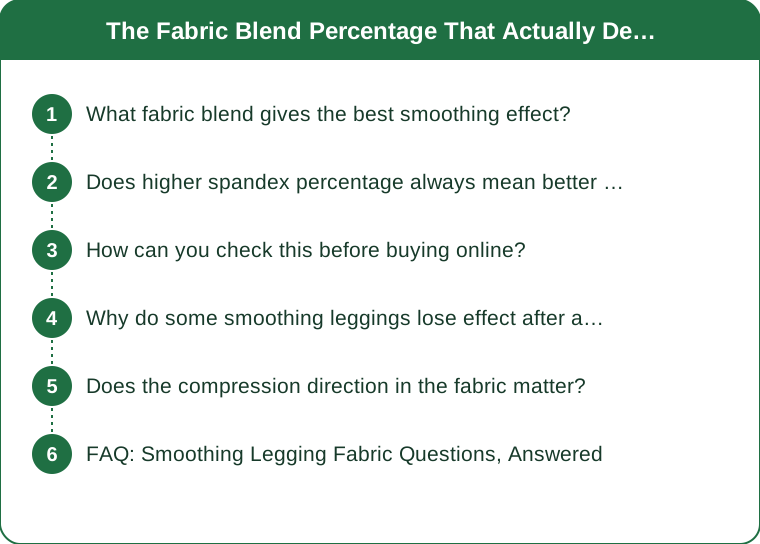
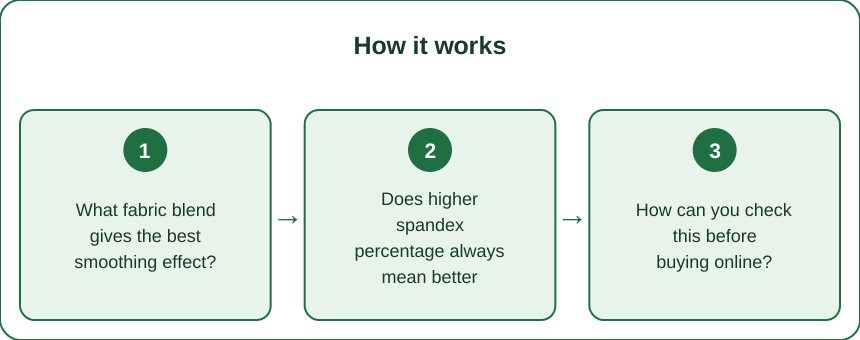
What fabric blend gives the best smoothing effect?
A ratio of roughly 75-80% nylon to 20-25% spandex tends to produce the firmest, most consistent compression, since nylon provides structure while spandex provides stretch-and-recover. Blends with lower spandex content (under 15%) often feel more like regular leggings and lose their smoothing effect faster with wear and washing.
Does higher spandex percentage always mean better smoothing?
Not necessarily — spandex above roughly 25% can actually feel less supportive because it prioritizes stretch over structure, similar to how too much elastic in a waistband can feel loose rather than firm. The nylon percentage is what provides the compressive backbone; spandex is what lets that structure move with you.
How can you check this before buying online?
Look at the fabric composition listed in the product description, not just marketing copy like ‘shaping’ or ‘sculpting.’ If the composition isn’t listed at all, that’s often a signal the brand is prioritizing a marketing story over transparent fabric specs, and it’s worth checking reviews for mentions of how the fit holds up after multiple washes.

Why do some smoothing leggings lose effect after a few washes?
Lower-quality spandex loses its elasticity faster under repeated stretching and washing, especially with high heat drying, which is why the same blend percentage can perform differently across brands depending on fiber quality. Washing in cold water and air drying preserves the compressive structure significantly longer than machine drying.
Does the compression direction in the fabric matter?
Yes — four-way stretch fabric (stretching evenly in all directions) tends to smooth more evenly across the body than two-way stretch, which only stretches in one direction and can create uneven pressure points. Most premium smoothing leggings specify four-way stretch, which is worth checking for alongside the blend percentage.
FAQ: Smoothing Legging Fabric Questions, Answered
Is cotton-blend fabric ever good for smoothing leggings?
Cotton blends are comfortable but rarely provide strong compression since cotton lacks the same elastic recovery as nylon-spandex blends, so they’re better for casual wear than true smoothing needs.
Does thickness matter as much as blend percentage?
Thickness contributes to opacity and some structure, but the blend percentage is still the primary driver of actual compressive smoothing power.
Can I test smoothing power in a fitting room?
Yes — do a squat test and check both opacity and how quickly the fabric snaps back to shape, which reveals more than how it feels standing still.
TL;DR:
- Look for roughly 75-80% nylon, 20-25% spandex for the firmest smoothing
- More spandex isn’t always better — it can reduce structure
- Four-way stretch smooths more evenly than two-way
- Cold wash and air dry to preserve compression longer
Next time you’re comparing smoothing leggings, skip the marketing language and go straight to the fabric composition tag — it tells the real story.
See It in Motion
Seen here: Super High Waist Embossed Yoga Leggings with Inner Pocket — shop it on bubblelime.com
Keep Reading
This article is for general informational and styling purposes only. Fit, sizing, and product availability may vary — check current details before purchasing.