What the Compression Percentage on Smoothing Activewear Labels Actually Means
Quick Answer: The spandex or elastane percentage on a fabric label indicates fiber content, not actual compression level — two fabrics with identical spandex percentages can feel completely different in smoothing power depending on knit density and fabric weight, both of which matter more than the percentage alone for how compressive a piece actually feels.
Two leggings both listed at 20% spandex, and one holds everything in place while the other feels barely more structured than a cotton legging. The percentage told you almost nothing about which one you’d get.
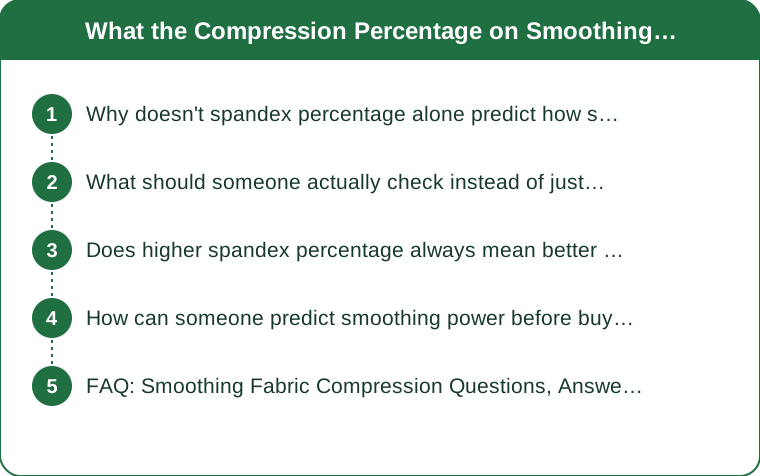
Why doesn’t spandex percentage alone predict how smoothing a fabric feels?
Spandex percentage describes fiber composition — what the fabric is made of — but says nothing about how tightly that fabric is knit, which is a separate manufacturing variable that significantly affects actual compression. A loosely knit fabric with 20% spandex can feel less compressive than a tightly knit fabric with only 15% spandex, because knit density determines how much the fabric actually resists stretching in practice, not just what fibers went into it.
What should someone actually check instead of just the percentage?
Fabric weight (often listed in GSM, grams per square meter, though not always disclosed) and knit density are better predictors of smoothing power than spandex percentage alone — heavier, denser fabrics generally provide more structured compression, while lighter fabrics at the same spandex percentage tend to feel more like standard stretch rather than true smoothing compression.

Does higher spandex percentage always mean better quality?
Not necessarily — very high spandex percentages (30%+) can sometimes indicate a fabric prioritizing stretch recovery over durability, and can occasionally feel less premium than a well-constructed mid-percentage blend (18-24%) with good knit density. The percentage is one input, not a single quality score, and extremely high numbers aren’t automatically better.
How can someone predict smoothing power before buying, especially online?
Checking reviews specifically for words like “structured,” “holds everything in,” or conversely “thin” and “not much compression” is more reliable than comparing spandex percentages between products, since reviewers are describing the actual felt experience that percentage alone doesn’t capture. Brand-specific fabric names (often trademarked terms for a particular knit-and-blend combination) are also worth researching, since they often indicate a consistent compression level across that brand’s product line.
FAQ: Smoothing Fabric Compression Questions, Answered
Is nylon-spandex or polyester-spandex generally more compressive?
Neither base fiber is inherently more compressive — it depends more on the specific blend ratio and knit construction than which base fiber (nylon vs polyester) is paired with the spandex.
Does fabric weight correlate with how hot a compressive piece feels to wear?
Generally yes — heavier, more structured fabrics tend to feel warmer and less breathable than lighter compression fabrics, which is a real tradeoff worth considering for warm-weather wear specifically.
Is there a standard industry term that reliably indicates high compression?
Not a universal one — most brands use their own trademarked fabric names, so researching what a specific brand’s fabric name actually refers to (often detailed on their site or in reviews) is more useful than looking for a generic industry-wide label.
TL;DR:
- Spandex percentage describes fiber content, not actual compression level in practice
- Knit density and fabric weight are better predictors of smoothing power than the percentage alone
- Higher spandex percentage isn’t automatically better — very high numbers can trade off durability
- Reviews describing the actual felt experience are more reliable than comparing label percentages
The number on the tag is a starting point, not the answer — how smoothing a fabric actually feels comes down to construction details the label was never really built to describe.
See It in Motion
Seen here: High Waist Yoga Leggings with Inner Pocket — shop it on bubblelime.com
Keep Reading
This article is for general informational and styling purposes only. Fit, sizing, and product availability may vary — check current details before purchasing.