Should You Size Down in Smoothing Leggings?
Quick Answer: Usually no. Sizing down increases pressure but reduces smoothing, because over-stretched fabric goes sheer, digs at the waistband, and creates the exact roll and bulge lines it is supposed to eliminate. The exception is a small one: if you are between sizes and the fabric has a high elastane content — 20 percent or more — the smaller size may sit better. Everywhere else, the fix is a higher-compression fabric in your true size, not a smaller size in a lighter one.
You tried your usual size, it felt a bit relaxed, and the internet told you that smoothing leggings are supposed to feel tight — so you went down one.
Now they roll at the waist by lunchtime and go translucent when you sit. This is the single most common sizing mistake in this category, and it happens because tightness and smoothing are being treated as the same thing. They are close to opposites past a certain point.

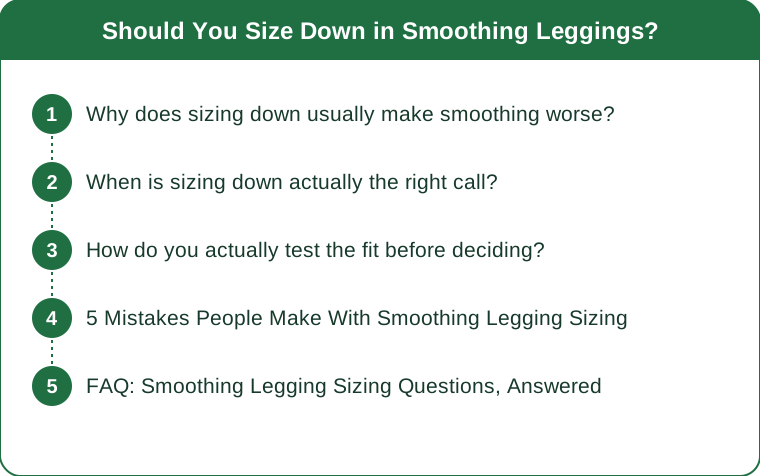
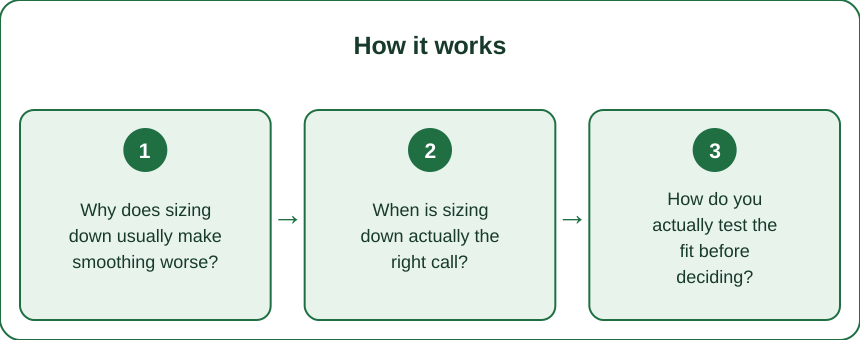
Why does sizing down usually make smoothing worse?
Because smoothing depends on the fabric distributing pressure evenly across a surface — and stretched-past-spec fabric cannot do that.
Compression knits are engineered to perform within a stretch range. Inside that range, the fabric holds a consistent, gentle pressure across the whole panel. Push past it and three things happen at once.
The knit opens up. Yarns pull apart, the fabric thins, and it goes sheer exactly where it is under most tension — across the seat when you bend. This is the number one cause of the squat-proof failure people blame on cheap fabric.
Pressure becomes uneven. Instead of a smooth field of light compression, you get high-pressure zones at the narrowest points — waistband, upper thigh, calf — and those edges create visible lines. A smaller waistband does not flatten anything; it displaces tissue above and below the band, which is the opposite of smooth.
The waistband loses its grip. A band stretched to its limit has no recovery left to resist being pushed down when you move. Counterintuitively, an over-tight waistband rolls down more, not less, because it is being squeezed off rather than held on.
When is sizing down actually the right call?
There is a narrow set of cases.
You are genuinely between sizes and closer to the lower one. If your measurements fall at the very bottom of a size range, the larger size will be loose enough to bag at the knee and ankle, which reads worse than mild snugness.
The fabric has high elastane content — 20 percent or more. These fabrics have a much wider comfortable stretch range and more recovery, so a size down stays within spec where a 12 percent elastane blend would not. Check the composition label rather than guessing.
The style runs large, and reviews say so consistently. Brand sizing is not standardized. Ten reviews saying the same thing is better data than a size chart.
The pair has already relaxed. Fabrics with lower recovery loosen after 15 to 20 wears. If you are replacing a pair that fit perfectly for the first month and then went slack, that is a fabric quality issue, not a sizing one — but sizing down on a repeat purchase of that same style is a reasonable workaround.
Outside those cases, the answer to wanting more smoothing is a different fabric, not a smaller number. Look for higher elastane, a wider bonded waistband, and a knit described as compression rather than buttery or lightweight.

How do you actually test the fit before deciding?
Four tests, in the fitting room or within the return window at home.
The bend test. Full squat in front of a mirror, or bend over and look back at the mirror. Any lightening of color across the seat means the fabric is at its stretch limit. That is a size up, immediately.
The two-finger waistband test. You should be able to slide two fingers flat under the waistband with mild resistance. No room means too tight. A whole hand with slack means too loose.
The ten-minute sit test. Sit for ten minutes, then stand. Deep indentation marks at the waist or thigh that take more than a minute to fade indicate pressure concentrated in a line — the definition of what smoothing is meant to prevent.
The walk-and-check. Walk for two minutes, then check the waistband without adjusting it. If it has moved down at all, it will move a lot more over eight hours.
One timing note: fit test in the afternoon, not first thing in the morning. Most people carry slightly more fluid later in the day, and a pair that fits at 8am can feel meaningfully tighter at 5pm. Buying to the morning fit is how people end up with leggings they stop wearing.
5 Mistakes People Make With Smoothing Legging Sizing
1. Sizing by dress size instead of measurements. Activewear sizing tracks hip and waist measurements, and the relationship to your dress size varies wildly between brands. Take a tape measure to your natural waist and the fullest part of your hips and use the chart.
2. Assuming one size fits across a whole brand. Different fabrics within the same brand fit differently. A lightweight training legging and a heavy smoothing legging in the same nominal size are not the same garment.
3. Ignoring rise. A lot of what people diagnose as a sizing problem is actually a rise problem. If the waistband sits at or just above your natural waist, it stays put; if it sits below, it rolls regardless of size. Buy the rise first, then the size.
4. Treating a compression feel as a fit signal. Compression leggings are supposed to feel firm on the leg and comfortable at the waist. Firm at the waist is a fit failure, not a feature.
5. Buying the same size after the fabric changed. Brands quietly reformulate. A repeat purchase in your known size can fit completely differently if the blend changed from 22 percent elastane to 15. Check the label on the new pair.
FAQ: Smoothing Legging Sizing Questions, Answered
Should I size up instead?
Only if the bend test fails or the waistband digs. Sizing up in a compression fabric loses some of the smoothing effect and can bag at the knee. The right answer is usually your true size in a firmer fabric rather than any size adjustment at all.
What if my waist and hips are different sizes?
Size to the hips and look for a wide, contoured, or bonded waistband, which accommodates a smaller waist far better than a straight elastic band. Some brands offer curve-specific fits designed for exactly this ratio, and they solve the problem more cleanly than compromising on size.
Do smoothing leggings stretch out over time?
The fabric relaxes slightly within the first few wears and then should stabilize. Progressive loosening over a couple of months means low elastane recovery or heat damage from the dryer. Wash cold, hang dry, and skip fabric softener — it coats elastane fibers and permanently reduces their snap-back.
TL;DR:
- Sizing down increases pressure but reduces smoothing — over-stretched fabric goes sheer, digs, and rolls.
- Size down only if you are truly between sizes, the elastane content is 20 percent or higher, or the style is documented to run large.
- Test with the bend test, the two-finger waistband check, a ten-minute sit, and a two-minute walk — in the afternoon.
- If you want more smoothing, change the fabric and the rise, not the number on the tag.
The pair you actually reach for every week is the one that disappears on you. That almost never happens a size down.
See It in Motion
Seen here: High Waist Embossed Yoga Leggings with Side Pockets — shop it on bubblelime.com
Keep Reading
This article is for general informational and styling purposes only. Fit, sizing, and product availability may vary — check current details before purchasing.