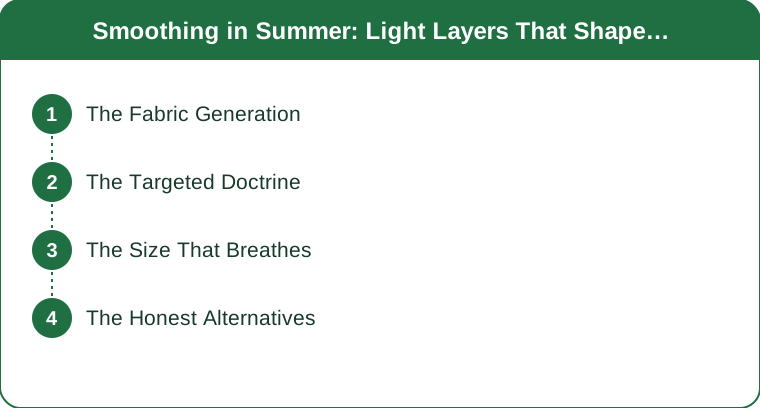
Smoothing in Summer: Light Layers That Shape Without the Sauna
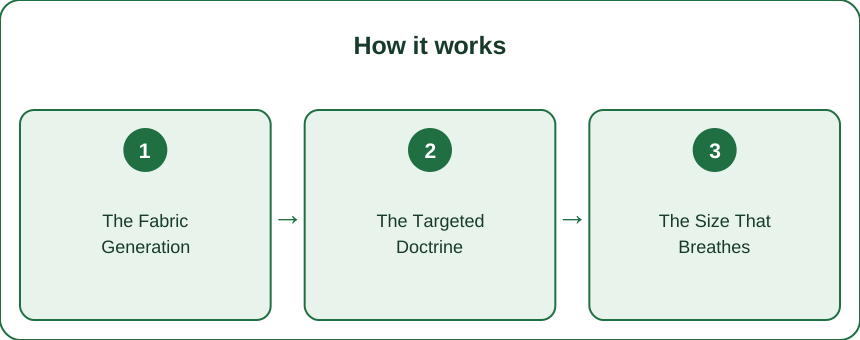
Quick Answer: Summer smoothing works if you change three things: switch to breathable power-mesh or wicking blends (look for “breathable,” “wicking,” or “cooling” on the label), wear a targeted piece instead of a full-body suit — a smoothing short under a sundress covers maybe 20% of the skin a bodysuit does — and wear your true size, never a size down. Sizing down adds compression and heat and gives you rolling and digging on top of it.
The piece that felt like a second skin in October becomes a personal sauna the second the forecast hits 85°F.
So most people just stop. Which is a fine choice — but it’s usually a choice made against a ten-year-old garment rather than against what’s actually available now.
Smooth and breathing aren’t mutually exclusive anymore. Three things stand between the drawer and a July that works.
Can shapewear actually be breathable?
Yes, and the difference between generations of it is dramatic.
The rubberized, sealed-surface shaping most people picture is genuinely hot — it traps everything. What replaced it does the same job through construction rather than through density: micro-mesh ventilation zones over the areas that sweat most, moisture-wicking blends that move damp away from skin, and featherweight power mesh that holds shape at a fraction of the thickness.
The label words that matter are breathable, wicking, and cooling. If the piece in your drawer predates all three, you’re evaluating summer smoothing based on obsolete technology.
Worth knowing: breathable doesn’t mean invisible-effort. A ventilated piece still warms you compared to nothing. It just moves the experience from “unbearable by 2 p.m.” to “forgettable.”
What’s the targeted-piece strategy?
Cover the smallest area that solves the actual problem, because coverage area equals heat load. It’s close to a one-to-one relationship.
- The smoothing short under a sundress. Handles the thigh line and doubles as an anti-chafe layer — one garment solving two summer problems, which is the best value in the category.
- The light waist-smoothing tank under a fitted midi. Addresses the torso only. Legs, hips, and everything below stay entirely uncovered.
- The high-rise brief. When only the waistline is the concern, that’s the only place fabric needs to be.
Compare that to a full bodysuit, which covers shoulders to thigh. In January, that’s warmth you didn’t mind. In July, it’s a wearable insulation blanket for a problem that lives in one specific spot.
Ask yourself where the issue actually is. It’s almost never everywhere.
Should you size down in shapewear for more smoothing?
No — and in summer this error compounds badly.
Sizing down doesn’t give you more smoothing. It gives you more compression, which is a different thing. Compression pushes displaced volume somewhere else, which is where the visible roll at the waistband comes from. It also traps more heat, because tighter fabric sits flatter against skin with less air moving underneath.
So you get: more heat, more digging, and a worse line than the correct size would have produced. Three losses for one decision.
Your true size smooths without restricting. The summer version of the rule is blunt: if it takes negotiation to get into, it will take a toll to wear. In 90°F heat, that toll gets collected within the hour.
What if you’d rather wear no layer at all?
Then wear no layer, and use the garment itself to do the work.
Structured fabrics that skim by cut. A dress in a medium-weight woven — good cotton poplin, a substantial crepe, a stiffer linen blend — holds its own shape away from the body. The fabric does the smoothing and no underlayer is required.
Strategic drape. Well-cut linen moves away from the body rather than clinging to it, which is why linen has been the hot-climate answer for several thousand years.
Nothing. Smoothing is a styling choice. It is not a summer obligation, a requirement, or a rule. Any guide that forgets to print that sentence is selling something.
If you’re already in high waist yoga pants or a supportive activewear piece for the day, that’s frequently all the smoothing an outfit needs — the base layer you’re wearing anyway is doing the job.
Myth vs Fact
Myth: All shapewear is hot. Fact: Rubberized and sealed constructions are hot. Ventilated power mesh with wicking blends is a different category — the ten-year-old piece in the drawer isn’t representative.
Myth: More compression equals a smoother line. Fact: Past a point, compression displaces volume and creates rolls. The correct size produces a better line than a size down.
Myth: You need full coverage for it to work. Fact: Targeted pieces solve targeted problems and generate a fraction of the heat. Coverage area is the main variable you control.
Myth: Smoothing pieces have to be invisible under everything. Fact: Under a substantial fabric, edges disappear on their own. It’s thin, clingy fabrics that show every seam — and those are the outfits where a structured dress fabric is the better answer anyway.
Myth: Summer means skipping it entirely. Fact: Summer means changing the fabric, the coverage, and the size. Skipping it is one valid option among several, not the only one.
FAQ
Is there shapewear that doesn’t make you hot?
Modern ventilated shapewear made with micro-mesh panels and moisture-wicking blends runs considerably cooler than the older rubberized constructions most people remember. It won’t feel like wearing nothing, but the difference between a sealed 2015-era bodysuit and a current breathable short is large enough to change whether you’d wear one in July at all. Look for “breathable,” “wicking,” or “cooling” on the label.
What can I wear under a summer dress instead of shapewear?
A pair of light smoothing shorts is the most common answer, since they handle chafing and the thigh line at once. Beyond that, a slip in a smooth fabric reduces cling without compressing anything, and a dress cut in a structured woven fabric often needs no underlayer at all because the fabric holds its own shape.
Should shapewear be tight?
It should be snug, not tight. You should be able to get into it without a struggle, sit down comfortably, and take a full breath. If putting it on is a wrestling match, or if it leaves marks after an hour, it’s too small — and in heat that translates directly into discomfort without a better result.
TL;DR:
- Breathable power mesh and wicking blends replaced the rubberized generation — check the label for breathable, wicking, or cooling.
- Coverage area equals heat load, so use targeted pieces: a smoothing short, a waist tank, a high-rise brief.
- Never size down. It adds compression and heat and produces rolling and digging, not a smoother line.
- Structured dress fabrics and good linen smooth by cut, with no underlayer required.
- Wearing nothing extra is always a legitimate option — this is styling, not obligation.
- If it takes negotiation to get into, it will take a toll to wear.
Keep Reading
This article is for general informational and styling purposes only. Fit, sizing, and product availability may vary — check current details before purchasing.