Does Thread Count Actually Affect How Long Smoothing Leggings Keep Their Shape?
Quick Answer: Thread count alone is a weaker durability predictor for smoothing leggings than fiber content and knit density — a higher thread count with low-quality elastane still loses compression faster than a moderate thread count built with a higher-percentage, quality elastane blend, so fiber composition matters more than the thread count number by itself.

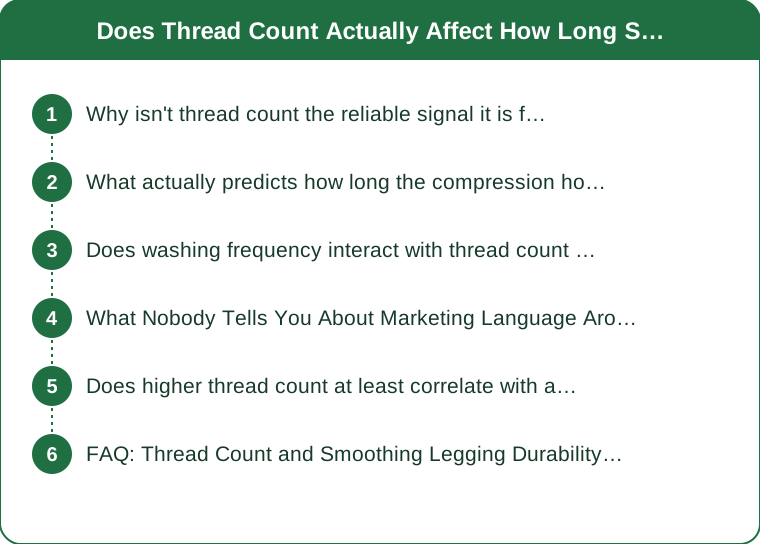
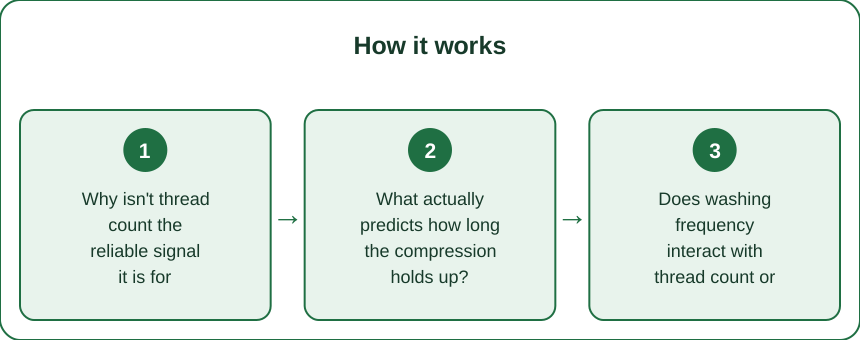
Why isn’t thread count the reliable signal it is for bedsheets?
Thread count measures fabric density, but smoothing leggings rely primarily on elastane content and knit structure for their compression function, not density alone — a densely woven fabric with poor-quality elastane will still lose its smoothing effect faster than a slightly less dense fabric with a better elastane blend.
What actually predicts how long the compression holds up?
Elastane percentage (generally 18-28% for quality smoothing leggings) combined with knit density is the more reliable durability predictor — elastane is the component responsible for recovery and compression, so its quality and proportion in the blend matters more directly than overall thread count.
Does washing frequency interact with thread count or fiber content more?
Washing primarily degrades elastane fibers over repeated cycles regardless of thread count, since heat and agitation break down elastane’s elasticity over time — this means wash habits (cold water, air drying) affect longevity more directly than the thread count number does.

What Nobody Tells You About Marketing Language Around Thread Count
Thread count gets marketed prominently partly because it’s an easy, familiar number for shoppers to compare, even though it’s not the most technically relevant spec for legging durability — checking the elastane percentage on the fabric content label is a more useful comparison point than thread count when it’s listed.
Does higher thread count at least correlate with a smoother visual finish?
Higher thread count often does correlate with a smoother, less visibly textured fabric surface, which matters for the smoothing aesthetic even if it doesn’t predict compression longevity — so it’s not irrelevant, just not the durability signal it’s sometimes marketed as.
FAQ: Thread Count and Smoothing Legging Durability, Answered
What elastane percentage should someone look for when shopping?
Generally 18% or higher elastane content is associated with more durable, longer-lasting compression in smoothing activewear, though brand-specific quality still varies within that range.
Does price correlate more reliably with durability than thread count?
Price is an imperfect proxy too, but brands charging a premium specifically for compression technology often do use higher-quality elastane blends, making price a slightly better (though still imperfect) signal than thread count alone.
How can someone tell elastane quality is declining before compression fully fails?
A looser, less snug feel after putting leggings on, compared to when new, combined with visible fabric sheen changes, are early signs elastane recovery is starting to decline.
TL;DR:
- Thread count is a weaker durability predictor for smoothing leggings than elastane content
- 18% or higher elastane percentage combined with knit density predicts longevity better
- Washing habits degrade elastane regardless of thread count number
- Thread count does correlate with visual smoothness, just not compression durability
Checking the fabric content label for elastane percentage is a more useful shopping habit than chasing a high thread count number.
See It in Motion
Seen here: High Waist Yoga Leggings with Side Pockets — shop it on bubblelime.com
Keep Reading
This article is for general informational and styling purposes only. Fit, sizing, and product availability may vary — check current details before purchasing.